 +88 01730495650





Uniview NVR Price in Bangladesh
Showing all 8 results

Showing all 8 results
Uniview NVR Price in Bangladesh
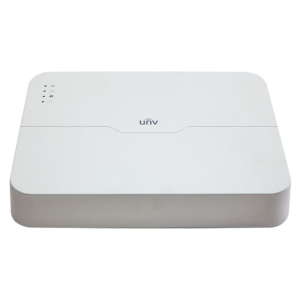
Uniview NVR’s is designed to record, store, manage, and monitor video from compatible IP cameras through a centralized network video recording system. The price depends on factors such as channel capacity, recording resolution, storage support, PoE capability, bandwidth, and model features. At Uniview Bangladesh, you can explore different options and choose a suitable recorder according to your surveillance requirements.
What is a Network Video Recorder?
A Network Video Recorder, or NVR, is a device used to receive and record digital video from IP cameras over a network. It provides a central point for managing surveillance footage, playback, storage, and monitoring. Depending on the model, an NVR may support multiple cameras, high-resolution recording, remote monitoring, storage expansion, and smart surveillance features.
When selecting a recorder, it is important to check its compatibility with your cameras and consider the required recording resolution, storage capacity, and network performance.
Channel Options for Different Surveillance Systems
The number of channels is an important factor when choosing an NVR. It indicates the number of camera channels supported by the recorder.
4 Channel NVR
A 4-channel NVR can be suitable for smaller surveillance systems such as homes, apartments, small shops, and compact offices where only a few IP cameras are required.
8 Channel NVR
An 8-channel model is suitable for small and medium-sized installations. It can be used for offices, retail stores, restaurants, homes, and other locations requiring several IP cameras.
16 Channel NVR
A 16-channel recorder can support larger surveillance systems and may be suitable for offices, warehouses, factories, schools, and commercial properties.
32 and 64 Channel NVR
Higher-channel models are designed for larger surveillance projects where multiple IP cameras need to be centrally recorded and managed. They can be considered for large warehouses, industrial facilities, commercial buildings, campuses, and other extensive installations.
4K NVR for High-Resolution Surveillance
A compatible 4K NVR can be used to record high-resolution video from supported IP cameras. High-resolution surveillance can provide greater image detail, which can be useful when monitoring entrances, parking areas, retail spaces, and other important locations.
Before choosing a 4K recorder, check the supported camera resolution, recording capability, incoming bandwidth, decoding performance, and storage requirements of the specific model.
PoE NVR for IP Camera Installation
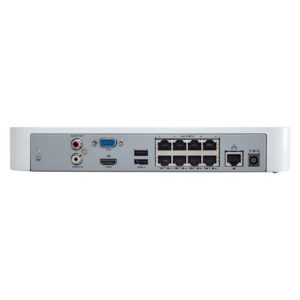
A PoE NVR can simplify the installation of compatible Power over Ethernet IP cameras. Supported PoE ports can provide both network connectivity and power to compatible cameras through Ethernet cables.
This can help reduce separate power connections and simplify cable management. However, PoE port count and power capacity vary between models, so these specifications should be checked according to the cameras being installed.
How to Choose the Right NVR
Choosing the right recorder depends on your complete surveillance requirements.
Camera Count: Consider how many cameras you need now and whether you may add more in the future.
Recording Resolution: Make sure the recorder supports the resolution required by your IP cameras.
Storage Capacity: Storage requirements depend on camera count, resolution, recording schedule, compression, and the desired footage retention period.
PoE Support: If you are using PoE cameras, select a compatible model with sufficient PoE ports and power capacity.
Future Expansion: If your surveillance system may grow, consider a recorder with additional channel capacity.
Applications
These network video recorders can be used in a variety of surveillance environments, including homes, offices, shops, restaurants, warehouses, factories, schools, hospitals, apartments, and commercial buildings.
For larger projects, camera compatibility, network infrastructure, storage capacity, recording bandwidth, and power requirements should be considered together to create a suitable surveillance system.
Why Choose Uniview NVR?
Uniview NVRs provide a centralized platform for recording and managing compatible IP cameras. Depending on the selected model, available capabilities may include high-resolution recording, multiple camera channels, storage support, remote monitoring, PoE connectivity, and smart surveillance functions.
Since features vary by model, checking the individual product specifications is recommended before making a purchase.
Buy NVR in Bangladesh
When buying an NVR in Bangladesh, consider your camera count, required resolution, storage needs, PoE requirements, and future expansion plans rather than choosing based on price alone.
At Uniview Bangladesh, you can explore available models and compare their specifications to find a suitable solution for your IP camera surveillance system. Whether you need a recorder for a home, office, shop, warehouse, factory, or commercial project, selecting the appropriate configuration can help create an organized and scalable surveillance system.
Frequently Asked Questions
What is the price of Uniview NVR in Bangladesh?
The price varies depending on the channel capacity, recording resolution, storage support, PoE capability, and model specifications. Check the current product listings for updated pricing.
Which NVR is suitable for 8 cameras?
An 8-channel model can be suitable for an eight-camera system, provided the cameras meet the recorder’s supported technical specifications.
Does Uniview NVR support 4K cameras?
Many models support high-resolution cameras, including 4K on supported models. Always check the specifications of the selected model before purchase.
What is a PoE NVR?
A PoE NVR provides Power over Ethernet connectivity on supported ports, allowing compatible IP cameras to receive power and network connectivity through Ethernet cables.
How much HDD storage is required?
Storage requirements depend on the number of cameras, resolution, recording schedule, compression, frame rate, and required retention period. Larger systems and longer recording periods generally require more storage.